
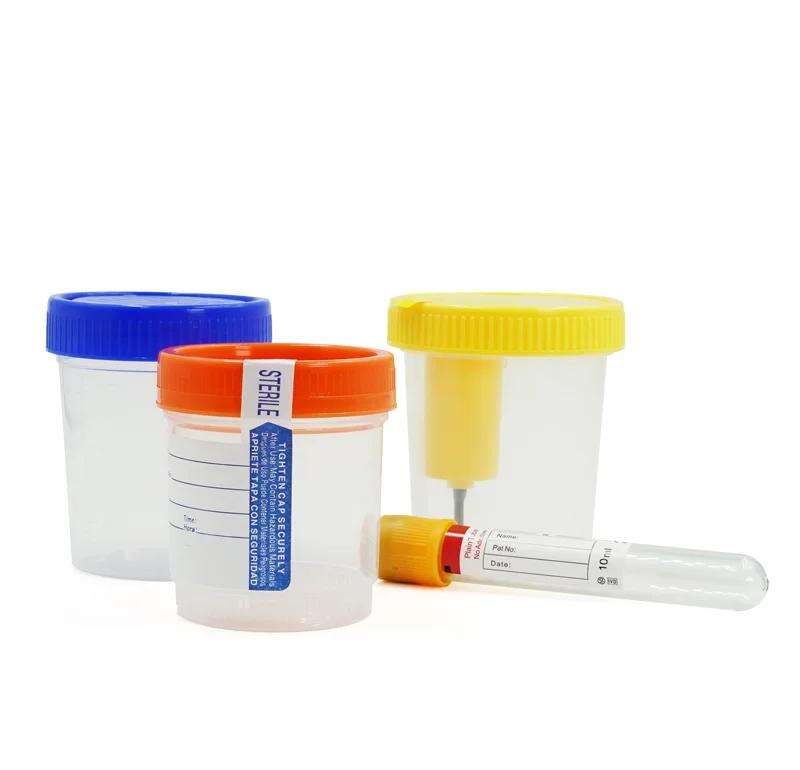
How Vacuum Urine Container Technology Ensures Diagnostic Accuracy
Scientific Principles Behind Vacuum-Sealed Preservation of Urine Samples
Vacuum sealed urine collection systems help keep samples intact because they create environments without oxygen where sensitive compounds like urobilinogen and bilirubin won't break down when exposed to air. These containers stop evaporation from happening too, so the pH stays balanced and concentrations remain consistent even after sitting at room temperature for three days straight. This matters a lot when trying to spot metabolic issues accurately in lab tests since degraded samples can lead to wrong readings.
Key Differences Between Standard Urine Cups and Vacuum Urine Container Systems
| Feature | Standard Cups | Vacuum Systems |
|---|---|---|
| Contamination Risk | 23% of samples exposed during transfer | <1% through sealed transfer mechanism |
| Biomarker Preservation | 18% degradation after 2 hours | 98% stability over 48 hours |
| Handling Requirements | Manual pouring increases spill risks | Direct vacuum transfer to lab tubes |
Data from a 2023 clinical workflow analysis of 12 hospitals and internal validation in the Journal of Clinical Pathology.
Reduction in Test Variability Using Vacuum Urine Container
A 2022 multicenter study published in the Journal of Clinical Pathology analyzed 4,800 paired samples and found vacuum urine containers reduced inter-lab variability by 42% compared to conventional methods. This improvement stemmed from tighter pre-analytical control, resulting in:
- 34% narrower confidence intervals for proteinuria measurements
- 29% fewer false-negative urine culture results
- 51% greater consistency in trace element detection
By minimizing pre-analytical errors—which account for 68% of urinalysis inaccuracies—vacuum systems support more reliable diagnostic outcomes.
Preventing Sample Contamination with Vacuum Urine Container Systems
Common Sources of Urine Sample Contamination in Non-Vacuum Collection Methods
Regular urine collection cups tend to get contaminated in several different ways. The problem starts with those flimsy lids that don't really seal properly, letting all sorts of germs from the air drift inside. Then there's the whole process of moving the sample around by hand, which inevitably brings along skin flakes and other stuff from whatever surfaces it touches. When these samples sit exposed to regular air and touch non-sterile materials, bacteria start growing and messing up important measurements like pH levels and other chemical indicators. According to research published in the Journal of Clinical Pathology back in 2022, nearly one out of four cases where doctors saw high white blood cell counts in standard urine samples actually turned out to be caused by how the samples were handled instead of any real health issue.
How the Vacuum Urine Container Minimizes Exposure to Airborne and Handling Contaminants
Modern vacuum urine containers rely on pre-sterilized components and sealed compartments to keep samples isolated right from the moment they're collected. These systems feature built-in vacuum technology that transfers specimens directly into testing vials, which means no more risky manual pouring around labs. A recent clinical review published last year found this method cuts down on human mistakes by nearly 90 percent, though results can vary depending on lab protocols. Most units come equipped with tamper proof locking mechanisms and are designed for one time use only, so there's zero chance of someone accidentally reopening them. The containers themselves often contain special antimicrobial agents embedded in their walls, helping to stop bacteria from multiplying while samples are being transported between facilities.
Case Study: Hospital Lab Reducing False Positives by 37% After Switching to Vacuum Urine Container
When a mid-sized regional hospital switched over to vacuum urine containers, they saw their UTI false positive rate drop by nearly 40% in just half a year. Before making the change, around 12.8% of samples had contamination issues, which meant doctors were often prescribing antibiotics unnecessarily. After implementing these new systems, those problems plummeted to just 4.1%. The lab technicians noticed something else too - their workflow became about 20% faster since there weren't so many repeat tests needed anymore. This matches what other facilities have found when upgrading their collection methods, showing better results across the board for everyone involved in diagnosing infections.
Vacuum Urine Container and Laboratory Standardization
The Impact of Vacuum Urine Container on Lab Workflow Efficiency
Using vacuum urine containers cuts down on manual transfers by around 60 percent, which means labs can get through roughly 120 to 150 samples during a shift instead of just 80 to 100 when relying on regular cups. These containers come with standardized threads and built-in seals that work seamlessly with the automated analyzers found in most CLIA certified labs these days. What does this mean for lab staff? Technicians actually save about 22 minutes every day they spend in the lab over an 8 hour period. That extra time isn't wasted anymore but gets redirected toward those complex analyses that really matter for patient care rather than getting bogged down preparing samples.
Industry Paradox: High Accuracy Claims vs. Inconsistent Usage Protocols for Vacuum Urine Container
Most laboratories report improved diagnostic consistency when using vacuum systems according to recent statistics, yet a survey conducted by the College of American Pathologists in 2023 reveals that only about 41 percent actually require proper training for staff handling them. There's quite a disconnect here. Labs might have the same equipment, but they still end up getting different results. For instance, there can be as much as a 12% difference in pH readings from one lab to another. Why? Well, small things matter a lot in this field. How samples are mixed and at what angle tubes are inserted into the system can really throw off measurements. These minor inconsistencies alone seem to wipe out around 34% of all possible improvements in accuracy. Recognizing this issue, ASTM International has started working on new standards under project number WK78999 aimed at creating uniform procedures throughout various facilities. However, implementing such changes will likely take time and face resistance from some quarters within the industry.
Trend: Rising Adoption of Vacuum Urine Container in Outpatient and Telehealth Testing
Urgent care centers that switch to vacuum urine containers see their UTI test results come back about half as fast compared to regular doctor's offices still using those old fashioned cups. The pandemic really pushed things forward here. Telehealth companies handed out around 2.8 million of these special vacuum kit things last year alone, which is way up from just over a million in 2021. People actually seem to like collecting their own samples too. About two thirds prefer this method because it keeps them from having to interact directly with medical staff. Makes sense when we think about what patients want these days - convenience without sacrificing quality care.
FAQs on Vacuum Urine Container Technology
1. What is the primary benefit of using vacuum urine containers?
The primary benefit of vacuum urine containers is the prevention of sample degradation and contamination, ensuring accurate diagnostic results.
2. How does vacuum technology enhance urine sample preservation?
Vacuum technology prevents exposure to air and contaminants, stabilizing sensitive compounds and maintaining sample integrity for extended periods.
3. Are there any challenges associated with using vacuum urine containers?
Some challenges include inconsistent usage protocols across labs and the need for proper staff training to maximize accuracy improvements.
4. Why is there a growing trend towards adopting vacuum urine containers in healthcare?
The trend is driven by their ability to enhance test accuracy, reduce false positives, and improve workflow efficiency, as demonstrated in various healthcare settings.