
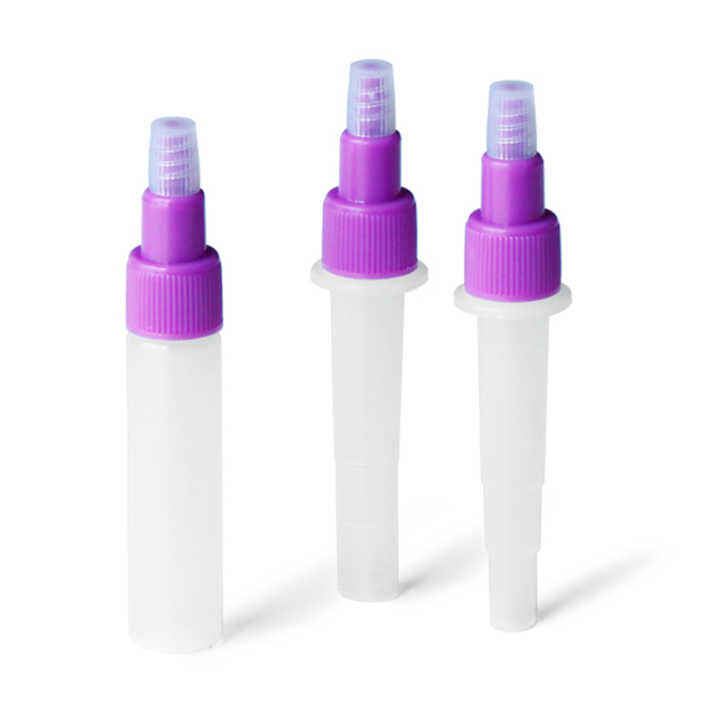
Understanding the Fecal Occult Blood Tube and Its Role in Colorectal Cancer Screening
Fecal occult blood tubes are specialized collection devices designed to detect hidden blood in stool samples, a key indicator of colorectal abnormalities. These tubes typically contain:
- A specimen container for stool collection
- Chemical reagents to stabilize hemoglobin
- Preservatives to inhibit bacterial growth
The fecal occult blood test (FOBT) leverages these components to screen for colorectal cancer, identifying microscopic bleeding that often precedes symptomatic disease. Studies show FOBT reduces colorectal cancer mortality by 33% through early detection (Mandel et al., 1993), with the tube's additives ensuring sample integrity during transport to laboratories.
Role of the Fecal Occult Blood Test (FOBT) in Early Detection of Colorectal Cancer
Fecal occult blood tests make it possible to screen people without invasive procedures, which helps get more folks into regular testing programs across communities. Back in 1993, researchers in Minnesota looked at colon cancer control and found that checking every other year with FOBT actually lowers deaths from cancer because it catches problems early when they're still just small growths or confined tumors. Today's recommendations say most adults should get tested once a year after turning 45. If something shows up positive on these tests, doctors usually want to follow up with a colonoscopy. This step-by-step method has worked well for large scale screening efforts while keeping costs down compared to other approaches.
Key Additives in Guaiac-Based Fecal Occult Blood Test (gFOBT) Tubes and Their Functions
Guaiac: The Central Chemical Reagent Detecting Heme in Fecal Samples
The guaiac-based fecal occult blood test (gFOBT) tubes get their name from guaiac itself, which is basically a resin derived from plants that has these special peroxidase-like properties. When this substance comes into contact with blood, specifically the heme part found in hemoglobin, something interesting happens. The guaiac acts kind of like a fake peroxidase enzyme and starts a reaction that changes color, which doctors can then see. Research shows that these tests can actually pick up on very small amounts of blood in stool samples, around 2 to 3 milliliters worth. Because of this sensitivity, guaiac based tests have remained important tools in checking for colorectal cancer for more than half a century now.
Hydrogen Peroxide as an Oxidizing Agent Enabling Color Development
The guaiac test needs hydrogen peroxide to work properly since it serves as an oxidizing agent. What happens is when heme breaks down hydrogen peroxide, free oxygen radicals form and then react with guaiac. This changes the substance from clear to blue in color. The color change is what doctors look at when reading gFOBT results. Studies indicate that if the peroxide concentration varies even slightly, it can affect how sensitive the test is by about 28%. That's why manufacturers must get the formula right in those fecal occult blood testing kits. Getting this balance correct makes all the difference between accurate diagnosis and false readings.
Buffering Agents Maintaining Optimal pH for Accurate Test Reactions
Stool samples naturally vary in acidity, which could inhibit guaiac's reactivity. Buffering agents like phosphate salts stabilize pH levels between 6.8 and 7.4—the ideal range for consistent peroxidase-like activity. Without these additives, false negatives could increase by 15–20% in acidic samples, according to laboratory trials.
Preservatives Preventing Microbial Degradation of Blood in Stool Samples
gFOBT tubes contain antimicrobial agents such as sodium azide to inhibit bacterial growth during storage. A 2020 stability analysis found preservatives extend sample viability from 48 hours to 14 days without significant hemoglobin breakdown. This preservation is critical for clinics with delayed processing times, reducing false negatives in multi-site settings.
The Chemical Reaction Mechanism in gFOBT: How Additives Detect Hidden Blood
Peroxidase-Like Activity of Heme and Its Interaction With Guaiac
The guaiac based fecal occult blood test, commonly known as gFOBT, works because of something called hemoglobins pseudoperoxidase activity. Basically what happens is when there's heme present in the sample, it reacts with both guaiac and hydrogen peroxide inside the testing container. This reaction causes oxidation to take place, which changes those phenolic compounds found in guaiac into quinones. The result? A noticeable color shift that indicates presence of blood. Pretty impressive actually since this method can pick up even tiny amounts of heme down to around 0.5 milligrams per gram of stool material. That level of detection makes the test quite effective for spotting potential issues during early stages of colorectal cancer screening programs.
Color Change Interpretation: From Colorless to Blue as Evidence of Occult Blood
A positive result manifests as a blue hue within 60 seconds, signaling heme's presence. The intensity correlates with blood concentration, though visual interpretation introduces subjectivity. False negatives may occur if blood isn't evenly distributed or if hemoglobin degrades during storage.
Factors Affecting Accuracy: Dietary Interferences and False Positives in Fecal Occult Blood Tubes
About 18 percent of gFOBT test results turn out to be false alarms because certain foods contain peroxidases that interfere with detection. Think red meats, horseradish, broccoli those kinds of things on the dinner plate can mess with test outcomes. And it's not just what we eat either medications such as NSAIDs or taking extra vitamin C pills will throw off readings too. Clinical studies from around 2020 showed something interesting actually, roughly one out of every five positive tests needed follow-up colonoscopies to confirm findings. This really underscores why doctors stress about what patients consume prior to getting tested. Most current guidelines suggest steering clear of these problem foods for at least two full days before undergoing screening to get better results. Makes sense when thinking about how diet affects so many aspects of health monitoring nowadays.
Fecal Immunochemical Testing (FIT): Differences in Additives and Sample Handling
Absence of chemical reagents in FIT: Focus on antibody-based detection in fecal immunochemical testing
FIT works differently from those old guaiac based FOBT tests because it uses special antibodies that lock onto the globin part of human hemoglobin. What this means is that FIT doesn't get confused by stuff like peroxidases in food or traces of animal blood, which cuts down on false positive results by somewhere between 40 and 60 percent when compared with traditional gFOBT methods according to research published in the Annals of Internal Medicine last year. More recently, a clinical review from 2024 showed how FIT's antibody method actually boosts test specificity up to around 94%, while still catching about 79% of colorectal cancers cases. That makes FIT much better at avoiding unnecessary follow ups while not missing real problems either.
Transport medium additives preserving hemoglobin integrity in FIT tubes
FIT collection tubes contain pH-stabilizing buffers and protease inhibitors to prevent hemoglobin degradation during transit. A 2023 stability study demonstrated these additives maintain 95% hemoglobin detectability for 14 days at 25°C, compared to less than 72 hours in unprotected samples. Key components include:
- Sodium azide: Inhibits bacterial growth
- EDTA: Chelates metal ions that degrade hemoglobin
- Surfactants: Help homogenize stool samples
Comparison of sample handling, stability, and patient compliance between gFOBT and FIT
FIT requires only one stool sample versus three for gFOBT, with no dietary restrictions before collection. This simplification increases completion rates by 33% in screening programs (Gastroenterology 2024). Unlike gFOBT's 48-hour viability window, FIT tubes preserve samples for up to 30 days when stored below 30°C.
Advantages of FIT over guaiac-based methods in modern colorectal screening programs
FIT's quantitative results enable risk stratification, detecting 2.5— more advanced adenomas than gFOBT at equivalent specificity levels. Population studies show FIT-based programs achieve 67% participation rates versus 49% for gFOBT, particularly improving access in underserved communities (JAMA Oncology 2023).
Storage, Stability, and Future Innovations in Fecal Occult Blood Tube Technology
Optimal Storage Conditions for Maintaining Additive Efficacy in Fecal Occult Blood Tubes
Proper storage preserves reagent functionality and sample integrity. Manufacturers recommend temperatures between 2—8°C with relative humidity below 60%, as excess heat or moisture can degrade guaiac reagents. Opaque containers protect light-sensitive components, ensuring consistent performance throughout the tube's shelf life.
Impact of Prolonged Storage on Test Performance and Sample Integrity
Delayed analysis risks hemoglobin breakdown and bacterial overgrowth, potentially leading to false-negative or false-positive results. Laboratories typically advise processing samples within 72 hours to maintain diagnostic accuracy, although FIT offers greater flexibility due to enhanced stabilization.
Emerging Trends: Dual-Method Tests, Smart Devices, and Regulatory Standards Shaping Next-Generation FOBT Tubes
The latest innovations feature dual method tubes that combine traditional guaiac testing with newer immunochemical approaches, which gives better results when detecting hidden blood. Labs are also adopting smart tech solutions like temperature indicators on packaging and QR code systems that track samples throughout processing. These improvements match what doctors recommend for colorectal cancer screening today. At the same time, updated regulations now require stricter controls over reagent quality and manufacturing processes for all modern FOBT platforms. The changes help maintain consistent test performance across different facilities and equipment models.
FAQ Section
What is the purpose of fecal occult blood tubes?
Fecal occult blood tubes are designed to detect hidden blood in stool samples, which can be an indicator of colorectal abnormalities, including cancer.
How does the fecal occult blood test (FOBT) help in cancer detection?
FOBT screens for colorectal cancer by identifying microscopic bleeding that often precedes symptomatic disease, thus facilitating early detection and reducing mortality rates.
What are the key differences between gFOBT and FIT tests?
gFOBT uses chemical reagents to detect blood in samples, whereas FIT relies on antibodies for detection, resulting in fewer false positives and improved specificity.
Why are preservatives used in gFOBT tubes?
Preservatives prevent microbial degradation and maintain sample viability during storage, ensuring accurate test results.
What are the storage requirements for fecal occult blood tubes?
Fecal occult blood tubes should be stored at temperatures between 2–8°C with humidity below 60% to preserve reagent functionality and sample integrity.
Table of Contents
- Understanding the Fecal Occult Blood Tube and Its Role in Colorectal Cancer Screening
-
Key Additives in Guaiac-Based Fecal Occult Blood Test (gFOBT) Tubes and Their Functions
- Guaiac: The Central Chemical Reagent Detecting Heme in Fecal Samples
- Hydrogen Peroxide as an Oxidizing Agent Enabling Color Development
- Buffering Agents Maintaining Optimal pH for Accurate Test Reactions
- Preservatives Preventing Microbial Degradation of Blood in Stool Samples
- The Chemical Reaction Mechanism in gFOBT: How Additives Detect Hidden Blood
-
Fecal Immunochemical Testing (FIT): Differences in Additives and Sample Handling
- Absence of chemical reagents in FIT: Focus on antibody-based detection in fecal immunochemical testing
- Transport medium additives preserving hemoglobin integrity in FIT tubes
- Comparison of sample handling, stability, and patient compliance between gFOBT and FIT
- Advantages of FIT over guaiac-based methods in modern colorectal screening programs
- Storage, Stability, and Future Innovations in Fecal Occult Blood Tube Technology