
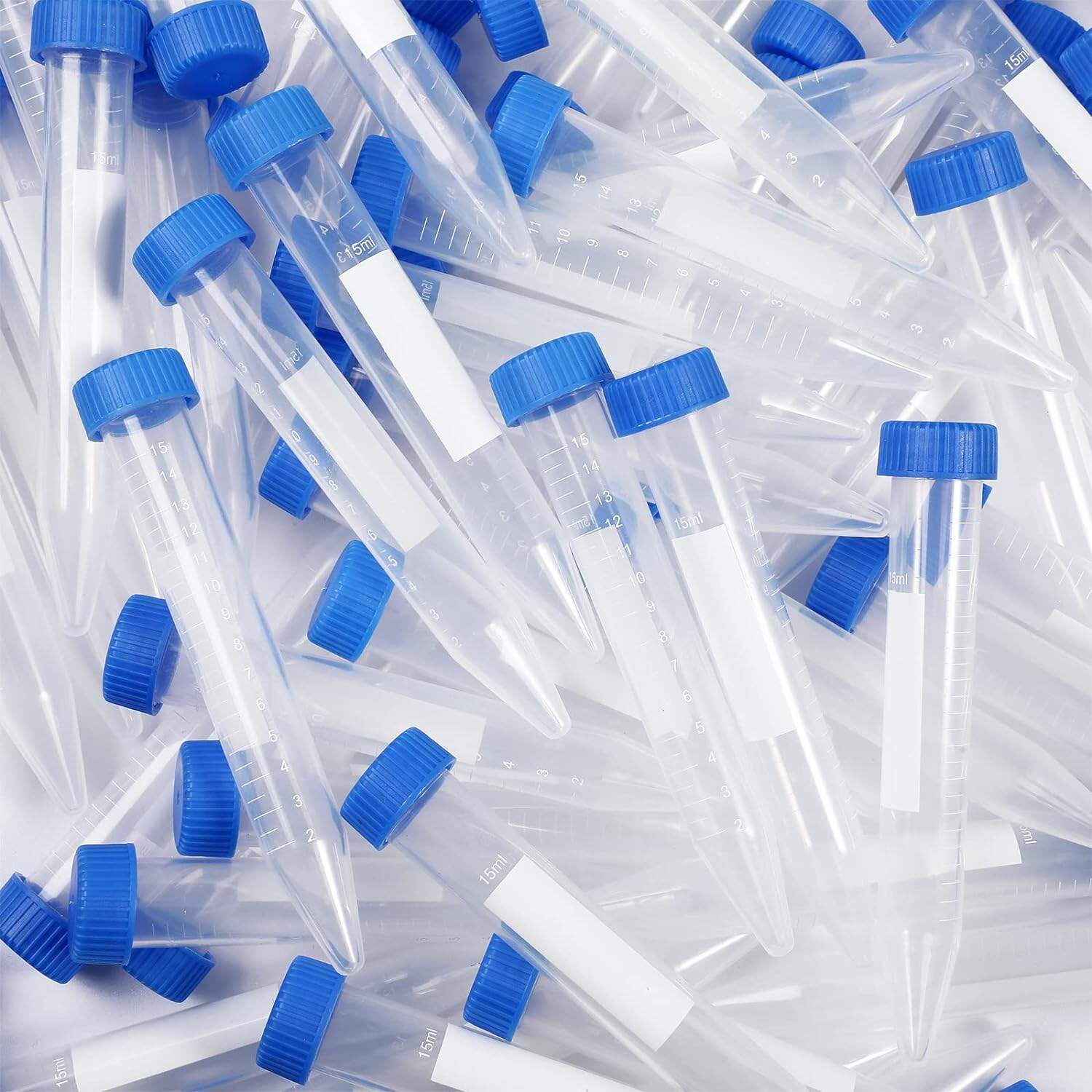
Material Properties and Chemical Compatibility of Centrifuge Tubes
Polypropylene: Chemical Resistance and Thermal Stability for Blood and Reagent Handling
In medical research labs across the country, polypropylene or PP centrifuge tubes have become pretty much standard equipment because they just don't react with most chemicals. These tubes stand up well against all sorts of substances including strong acids, bases, and those pesky organic solvents that can mess things up during experiments. That's why they're so commonly used when handling blood samples or storing various reagents needed for tests. What makes them really special is how stable they stay even after multiple rounds of autoclaving at around 120 degrees Celsius, which keeps everything sterile enough for delicate procedures such as extracting DNA from cells. Compared to other materials on the market, PP doesn't crack or deform under high speed spinning in centrifuges, plus there's less chance of samples sticking to the walls of the tube. The fact that PP remains chemically inactive means fewer unwanted reactions happen during important biological tests, which helps maintain sample quality throughout complex processes like polymerase chain reaction (PCR) experiments where contamination could ruin results.
Polycarbonate: High-Speed Performance vs. Sterility and Solvent Limitations
Polycarbonate tubes, often called PC tubes, have excellent optical clarity and can handle forces over 30,000 times gravity, which makes them great for things like ultracentrifugation. However, they don't play well with many chemicals. When exposed to common lab solvents such as ethanol or acetone, these tubes actually start breaking down, which can mess up samples. Another problem is that most PC tubes won't survive steam sterilization processes, so labs needing sterile conditions for cell cultures or diagnostic tests usually avoid them. Because of these limitations, researchers tend to save PC tubes for those special cases where they need super fast separation speeds and aren't worried about using solvents or maintaining strict sterility standards.
Glass Centrifuge Tubes: Declining Use Due to Contamination and Safety Risks
The use of glass centrifuge tubes in clinics has dropped dramatically, down around 70% since 2015 according to recent data. When these tubes break during spinning, they create major problems for lab staff. Shards can fly everywhere, posing risks not just from cuts but also potential contamination if samples contain pathogens. Even specialized borosilicate glass isn't immune to damage from harsh chemicals like hydrofluoric acid or strong bases. Labs are finding it simply doesn't make sense financially either. Glass requires constant replacement at much higher cost than plastic alternatives. And let's face it, plastic offers better sterility control and consistent performance without all the fragility issues. Most modern diagnostic facilities have switched completely to disposable plastic tubes now, leaving glass behind as an outdated option in most research environments.
Why Polypropylene Dominates Medical Research Despite Mechanical Trade-offs
While polypropylene isn't as tough against impacts as polycarbonate materials, what makes PP stand out is how well it handles chemicals without reacting, can withstand autoclaving processes, works across a wide range of temperatures from minus 80 degrees Celsius all the way up to 135 degrees, and costs much less than alternatives. These qualities explain why most labs end up using PP products for around 85% of their needs in medical research settings. Research conducted over recent years indicates that when working with PP containers instead of glass ones, there's roughly a 90% reduction in proteins sticking to surfaces. This matters a lot when trying to get reliable results from plasma samples looking for specific biomarkers. What really cements PP's dominance though is its adaptability throughout various lab procedures. Whether scientists need something that survives freezing conditions during sample storage or equipment that works reliably during those tricky phenol-chloroform extraction steps, PP consistently comes through. That's why so many standard operating procedures across different research facilities default back to PP whenever possible.
Centrifuge Tube Geometry and Its Impact on Sample Recovery and Separation Efficiency
Conical vs. Round-Bottom Tubes: Pellet Recovery and Compatibility with Density Gradient Protocols
The conical shape of these tubes really helps pack those pellets tightly at the bottom when we spin them down in the centrifuge. Most labs report getting over 95% back of whatever DNA stuff or cell bits they're trying to collect, which matters a lot for experiments where losing even small amounts can throw off results completely. Round bottom tubes work differently though. They let fluids move around more evenly during those tricky density separation steps. This is super important when working with blood samples to get clean lymphocyte populations. The curved sides actually make it easier to layer different solutions properly. Take Ficoll-Paque procedures for instance. If the layers aren't smooth enough, we end up with too many unwanted cells mixed in, making our final sample less pure than needed for proper analysis.
Optimizing Tube Shape for PBMC, Plasma, and Serum Isolation in Clinical Workflows
When isolating peripheral blood mononuclear cells (PBMCs), lab technicians have found that tubes with a 15 degree conical angle work best because they strike a good balance between getting dense pellets and keeping red blood cells out. If the angle gets too steep though, there's about a 12% jump in granulocyte contamination according to some recent comparative tests. Plasma harvesting tells a different story where slightly curved conical shapes actually speed things up during separation while also cutting down on platelet activation, which is really important for anyone doing coagulation research. For serum work, moderate tapering seems optimal since it helps clots move through properly without getting stuck in those pesky fibrin matrices. These days most high throughput diagnostic labs stick with graduated conical tubes as their go to option. They cut processing mistakes by around 18% compared to regular cylinders mainly because they allow much better control over volumes and create cleaner pellet formations at the bottom.
Sterility Assurance and Leak-Proof Design for Sensitive Medical Assays
Sterilization Methods: Gamma Irradiation vs. Ethylene Oxide for DNase/RNase-Free Certification
When it comes to sterilizing DNase/RNase-free centrifuge tubes, most labs rely on either gamma irradiation or ethylene oxide (EtO). Gamma works great because it goes right through packaging without leaving behind any chemicals, which is why many people prefer it for tubes that already have stuff in them or ones sensitive to heat. But there's a catch - if these tubes sit under gamma rays too long, their polycarbonate can start breaking down over time. On the other hand, EtO handles a wider range of materials just fine, although after treatment, they need plenty of air time to get rid of those pesky toxic leftovers that might mess up PCR reactions later on. Looking at numbers, gamma sterilization knocks out about 99.9% of nucleases while EtO manages around 97.2%. Still, when dealing with complicated setups that include metal parts, most technicians still go with EtO despite the extra steps involved.
Cap Seal Integrity and ASTM-Validated Performance in Clinical Sample Transport
A good leak proof cap design really matters when it comes to stopping aerosol contamination and keeping samples from breaking down during those high speed spins in centrifuges or during transportation. Tubes that have been tested in clinical settings actually comply with ASTM F2095 standards regarding how well they seal. These standards simulate what happens in real life situations like drastic temperature shifts from around minus 80 degrees Celsius all the way up to 40 degrees, pressure changes similar to what would happen at about 35 thousand feet above sea level, plus various kinds of mechanical shocks too. When looking at actual data from CDC validation studies, dual position snap closures combined with molded elastomer liners cut down on leakage problems by roughly half compared to regular single gasket designs. This becomes especially important for handling infectious materials like SARS CoV 2 samples where even tiny leaks can lead to RNA degradation and ultimately result in false negative test results.
Matching Centrifuge Tube Capacity and Speed Ratings to Medical Research Applications
Microcentrifuge Tubes (1.5 mL): G-Force Limits and Low-Binding Surfaces for DNA/RNA Extraction
The standard 1.5 mL microcentrifuge tubes can handle centrifugal forces well beyond 20,000 times gravity, making them great for isolating nucleic acids at high speed. These tubes have special polypropylene surfaces that bind much less DNA and RNA material, which actually boosts extraction results by around 12 to 15 percent when compared with regular tubes. For samples under 200 microliters, it's really important not to fill them more than about 90% full otherwise they might deform when spun at those extreme speeds. The nuclease-free certification means researchers get samples ready straight away for PCR work without extra steps. Plus, those conical bottom designs help recover pellets better during silica column purifications. Always check what the manufacturer says about maximum RCF levels too since these limits protect valuable clinical samples that simply cannot be replaced if something goes wrong.
Larger-Volume Tubes (15â€"50 mL): Fill Volume Guidelines for PRP, Plasma, and PBMC Processing
When isolating platelet-rich plasma (PRP), regular plasma, and PBMCs at clinical scale, researchers typically work with those standard 15 to 50 mL centrifuge tubes that come with very specific filling instructions. Fill these tubes past the 75% mark and things start going wrong fast. The separation process becomes inefficient and there's a much higher chance of leaks since the meniscus doesn't form properly. Most labs run these tubes at relatively low RCF settings, usually under 10,000 x g, because they want to keep the cells intact during those long spin cycles. The conical shape of these tubes actually helps recover more pellets when doing density gradients, which is why most manufacturers stick with them. And let's not forget those screw caps with silicone seals that stop pesky aerosols from contaminating samples. Labs have found through experience that if they underfill tubes below 50%, PBMC yields drop anywhere from 12% to 18%. That's why good volume control remains absolutely critical for anyone working in cell therapy research today.
Application-Specific Centrifuge Tube Selection in Key Medical Research Areas
Medical research demands precision-matched consumables for reliable results. Selecting the optimal centrifuge tube requires understanding application-specific pressures and protocols.
PRP and Platelet Studies: Silicone-Coated Tubes to Prevent Activation
Platelet-rich plasma (PRP) workflows require tubes with specialized silicone coatings to prevent unintended platelet activation during centrifugation. Standard polypropylene tubes trigger activation in 37% of samples, skewing regenerative medicine outcomes. Silicone-treated alternatives maintain platelet viability above 95% at 1,500â€"3,000 × g—ensuring consistent growth factor release and therapeutic efficacy.
PCR and Molecular Diagnostics: Optical Clarity and Nuclease-Free Centrifuge Tubes
PCR and qPCR workflows demand ultra-clear tubes with certified nuclease-free surfaces. While polycarbonate offers >92% light transmission for real-time fluorescence detection, its susceptibility to solvents limits utility in phenol-chloroform extractions. Chemically inert polypropylene prevents RNA degradation in such steps, and DNase/RNase-free certification reduces false negatives by 29% versus standard tubes.
Cell Culture and Cryopreservation: Screw-Cap, Graduated Tubes for Long-Term Storage
Cryogenic storage requires screw-cap tubes with leak-proof seals and printed graduations. Conical designs enable 99% cell pellet recovery after thawing—critical for primary cell lines. Polypropylene retains flexibility at —196°C, and internal threading prevents cap displacement during rapid temperature shifts, reducing contamination risks by 41% in biobanking applications.
FAQ Section
What are the main advantages of polypropylene centrifuge tubes in medical research?
Polypropylene centrifuge tubes offer chemical resistance, thermal stability, and low cost. They are suitable for autoclaving, handling a wide range of temperatures, and significantly reduce protein binding in experiments, making them a preferred choice in medical research.
Why is polycarbonate used in ultracentrifugation but not ideal for sterility?
Polycarbonate tubes handle high g-forces well, making them suitable for ultracentrifugation. However, they are not ideal for sterility because they degrade in steam sterilization and chemically react with solvents.
What factors influence the choice of tube shape in lab procedures?
Tube shape impacts pellet recovery and separation efficiency. Conical tubes are used for pellet recovery, while round-bottom tubes assist in even fluid distribution for density gradient procedures.
Why is sterilization challenging for polycarbonate tubes?
Polycarbonate tubes are challenging to sterilize because they degrade under prolonged exposure to gamma rays and require detailed handling to ensure ethylene oxide residues are removed post-sterilization.
Table of Contents
-
Material Properties and Chemical Compatibility of Centrifuge Tubes
- Polypropylene: Chemical Resistance and Thermal Stability for Blood and Reagent Handling
- Polycarbonate: High-Speed Performance vs. Sterility and Solvent Limitations
- Glass Centrifuge Tubes: Declining Use Due to Contamination and Safety Risks
- Why Polypropylene Dominates Medical Research Despite Mechanical Trade-offs
- Centrifuge Tube Geometry and Its Impact on Sample Recovery and Separation Efficiency
- Sterility Assurance and Leak-Proof Design for Sensitive Medical Assays
- Matching Centrifuge Tube Capacity and Speed Ratings to Medical Research Applications
- Application-Specific Centrifuge Tube Selection in Key Medical Research Areas
- FAQ Section