
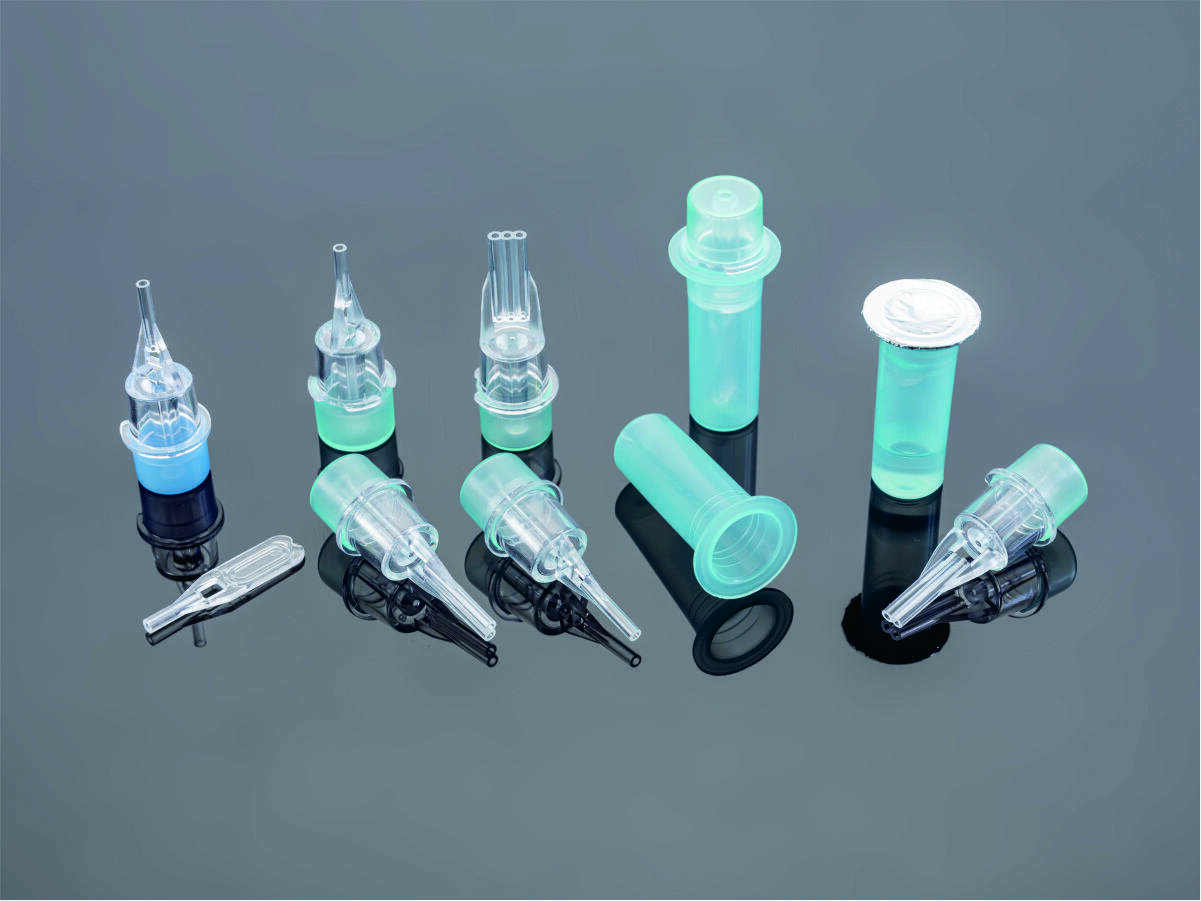
Clinical Requirements for Capillary Blood Sample Collectors
Why CLIA-waived, FDA-cleared capillary blood sample collectors are essential for primary and rural clinics
Capillary blood sample collectors that have both CLIA waiver and FDA clearance allow primary care centers and rural clinics to run reliable point of care tests like checking glucose levels or analyzing hemoglobin without needing a full lab setup. The devices pass rigorous standards for how easy they are to use, their safety features, and overall performance. This means trained medical assistants can actually collect samples without needing specialized phlebotomy training. For places with limited resources where around 60 percent of healthcare workers often juggle several different jobs at once, having equipment certified under both regulations really helps streamline operations. Studies from rural health facilities show these devices cut down on waiting times for results by almost half, sometimes as much as 48%. That makes all the difference when doctors need to make treatment decisions quickly but venipuncture just isn't practical.
Key functional criteria: volume accuracy, anticoagulant compatibility, hemolysis prevention, and patient comfort
Four evidence-based functional criteria define high-performing capillary blood sample collectors:
- Volume accuracy (±5% tolerance) maintains correct blood-to-additive ratios critical for assay reliability
- Anticoagulant compatibility ensures consistent performance with EDTA or heparin coatings to prevent clotting
- Hemolysis prevention, achieved through calibrated lancet depth control and optimized capillary tube surface chemistry, cuts false potassium and ALT elevations by 34%
- Patient comfort, supported by ergonomic design and sub-25G lancets, improves compliance—especially among pediatric and geriatric patients
Clinics applying these criteria report 27% fewer sample rejections and stronger adherence in longitudinal care programs.
Regulatory Compliance Essentials for Wholesalers
FDA classification pathways for capillary blood sample collectors: Class I vs. Class II (510(k)) requirements
The FDA categorizes capillary blood sample collectors according to their risk levels. Standard lancets and simple collection tubes generally fall into Class I, which means they're considered low risk. These devices mostly need to follow basic controls like registering the manufacturing facility and meeting quality standards. Many don't even require approval before hitting the market. Things get more complicated for Class II devices that pose moderate risks. Think about those with fancy features like exact volume control, special coatings to prevent clotting, or built-in testing capabilities. These gadgets need what's called 510(k) clearance from the FDA. Basically, manufacturers must prove their product works similarly to something already on the market through performance testing data.
| Feature | Class I | Class II (510(k)) |
|---|---|---|
| Risk Level | Low | Moderate |
| Regulatory Path | Mostly exempt | Premarket notification required |
| Examples | Standard lancets, basic collection tubes | Anticoagulant-coated tubes, precision volume collectors |
CE marking, ISO 13485, and UDI compliance — non-negotiables for global distribution
Getting these capillary blood sample collectors into international markets requires meeting several key compliance standards first. The most important is obtaining CE marking under the EU's Medical Device Regulation (MDR). This involves submitting detailed technical documentation along with results from clinical evaluations. Then there's ISO 13485 certification for suppliers, which basically checks if their quality management covers everything from product design right through manufacturing processes and what happens after products reach customers. Lastly, companies need to implement Unique Device Identification (UDI) labels following GS1 standards so every device can be tracked from factory floor to patient bedside when needed for recalls or tracking adverse events. Distributors should make sure suppliers have all three certifications covered during routine audits because missing even one could lead to serious problems at customs checkpoints, hefty fines from regulators, or worse yet, having entire product lines pulled off shelves without warning.
Supplier Evaluation Framework for Reliable Wholesale Partnerships
The 5-pillar vetting checklist: certification traceability, MOQ flexibility, packaging integrity, logistics SLA, and technical support
Selecting wholesale partners demands disciplined due diligence—particularly given that 78% of medical device recalls originate from supplier-related failures, according to the FDA’s 2022 recall analysis. A robust five-pillar framework mitigates procurement risk while safeguarding clinical continuity:
- Certification traceability: Require documented proof of ISO 13485 certification and batch-specific validation reports—not just certificates of conformance—to confirm ongoing regulatory alignment.
- MOQ flexibility: Prioritize suppliers offering tiered minimum order quantities (e.g., 500–5,000 units) so clinics can scale purchases to match utilization without overstocking or stockouts.
- Packaging integrity: Validate tamper-evident, particulate-free seals and temperature-controlled shipping protocols—critical for preserving collector sterility and functional stability during transit.
- Logistics SLA: Negotiate enforceable service-level agreements specifying guaranteed delivery windows, real-time shipment tracking, and expedited replenishment protocols for urgent clinical needs.
- Technical support: Choose partners providing responsive, clinician-accessible troubleshooting—ideally including rapid-response phone or chat channels—to resolve collector performance issues before they impact patient care.
Healthcare supply chain analyses show this structured approach reduces procurement-related disruptions by 63%.
Cost-Effective Procurement Strategies for Clinics
Tiered bulk pricing models and total cost of ownership analysis (including waste, training, and rework)
Tiered bulk pricing—where discounts scale with order volume (e.g., 500–2,000+ units)—can reduce per-unit acquisition costs by 18–22% for high-volume clinics, per the Journal of Healthcare Finance (2023). Yet true value emerges only through total cost of ownership (TCO) analysis, which accounts for hidden operational expenses:
- Waste minimization: Proactive inventory management—tracking expiration dates, usage rates, and seasonal demand—reduces discarded stock by 15–30% annually.
- Training efficiency: Standardized, competency-based onboarding lowers collection errors by 40%, avoiding $27 in rework costs per mishandled sample.
- Operational time savings: Ergonomic collector designs shorten draw time by ~20 seconds per patient—translating to $8,100 in annual labor savings for a clinic performing 500 draws weekly.
Critically, premium collectors with ¥98% hemolysis prevention often deliver 34% lower lifetime costs despite higher upfront pricing—by eliminating repeat testing, minimizing patient recalls, and sustaining clinical confidence. Clinics should negotiate contracts that embed technical support, volume-based pricing, and flexible restocking terms to lock in sustainable savings.
Frequently Asked Questions (FAQ)
What does CLIA-waived mean for capillary blood sample collectors?
CLIA-waived status indicates that a device is simple to use and presents a low risk of an erroneous result, making it suitable for non-laboratory settings like primary care offices.
Why is FDA clearance important for these devices?
FDA clearance ensures that the device meets safety and effectiveness standards, making it reliable for health professionals to use in point-of-care testing.
What types of devices fall under FDA Class I and Class II?
Class I devices typically include standard lancets, which pose low risk, while Class II devices, like anticoagulant-coated tubes, are considered moderate risk and require 510(k) clearance.
What is the significance of CE marking and ISO 13485 certification?
CE marking demonstrates compliance with EU's regulatory standards for medical devices, while ISO 13485 certification ensures comprehensive quality management systems in manufacturing.
How does tiered bulk pricing benefit clinics?
Tiered bulk pricing reduces per-unit acquisition costs, helping clinics save money as they increase their order volume.