
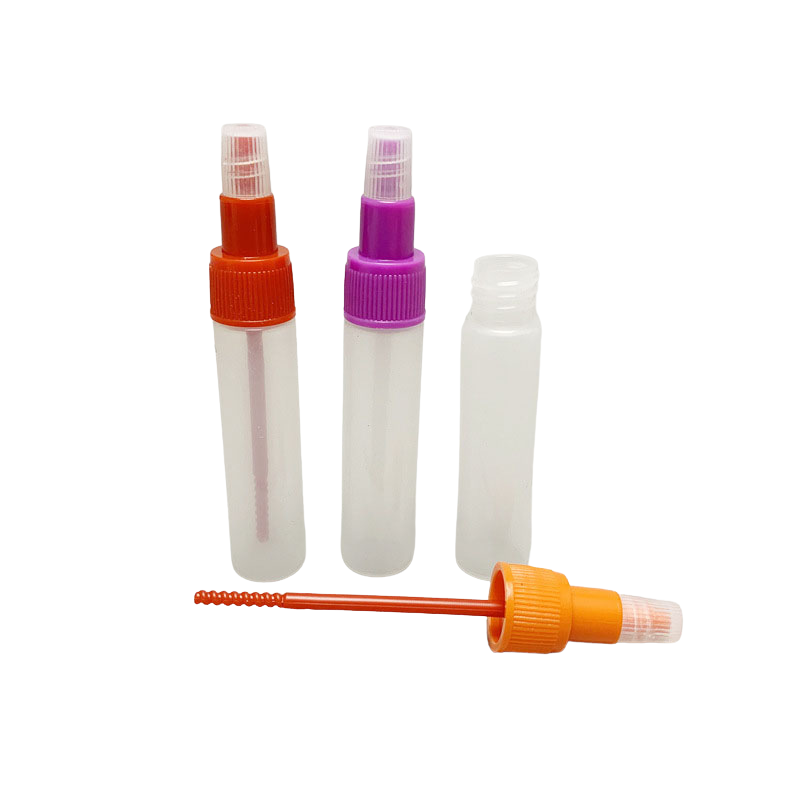
Understanding Fecal Occult Blood Tubes and the Importance of Stability
What is a fecal occult blood tube and why stability matters
Fecal occult blood tubes serve as special containers for collecting and preserving stool samples when looking for signs of hidden blood. How stable these tubes remain affects how accurate the diagnosis ends up being because if the sample isn't stable enough, the hemoglobin starts breaking down and might lead to missed results. Research from 2023 actually showed something pretty concerning - samples kept in poor quality tubes broke down their hemoglobin about 23 percent quicker than those in better ones. This highlights why manufacturers need to focus on using materials that won't react chemically with the sample contents plus making sure the containers have good air tight seals throughout production processes. After all, nobody wants inaccurate test results due to faulty storage conditions.
Key functions of fecal occult blood tube in sample preservation
These tubes perform three critical preservation functions: preventing bacterial growth through antimicrobial additives, stabilizing hemoglobin molecules via buffered solutions, and maintaining sample consistency during transport. High-quality tubes extend the time-to-analysis window to 72 hours while keeping hemoglobin degradation below 5%âa benchmark supported by CLSI guidelines for fecal immunochemical testing.
Common challenges with unstable fecal occult blood tube performance
Common stability failures include cracked seals causing oxidation (12% of rejected samples in lab audits), temperature-induced preservative separation, and lot-to-lot variability in anticoagulant concentrations. These issues contributed to 18% of false-negative colorectal cancer screenings in a multicenter 2024 trial, underscoring the need for manufacturers to implement enhanced stability protocols.
Core Material and Design Factors Affecting Fecal Occult Blood Tube Stability
Evaluating Tube Material: Plastic vs. Glass in Fecal Occult Blood Tube Integrity
The main materials used in making fecal occult blood tubes are plastic and glass, each bringing different stability characteristics to the table. PET plastic tubes have pretty good resilience against breaking during shipping, with around 98% resistance to shattering, which is why many large labs prefer them for their volume needs. On the flip side, borosilicate glass stands out because it doesn't react much with chemicals. Tests show only about 0.02% interaction between glass and hemoglobin preservatives, whereas plastic interacts at roughly 0.12% under similar conditions after accelerated aging. There's been some interesting developments recently though. New coatings made from silica are starting to close the performance gap between these materials, giving plastic tubes better stability while still keeping their inherent toughness advantages over glass alternatives.
Preservative Formulation Compatibility in Fecal Occult Blood Tubes
Tube materials must form synergistic partnerships with chemical stabilizers. Incompatible combinations can accelerate hemoglobin degradation by 16% within 72 hours. Aluminum-lined stoppers prevent oxidation better than standard rubber variants, particularly when paired with guaiac-based preservatives. Manufacturers are shifting toward dual-chamber designs that separate stabilizing reagents from samples until centrifugation.
Impact of Sealing Mechanisms on Leakage and Degradation
Seal integrity directly impacts clinical validityâ22% of false-negative results trace to sample oxidation from inadequate closures. Emerging helical-thread caps demonstrate 99.8% leak prevention under pressure changes compared to traditional push-fit designs. Temperature-activated gasket materials now automatically compensate for thermal expansion during storage.
UV and Temperature Resistance in Long-Term Storage Scenarios
High-performance tubes block 99% of UV-B radiation while maintaining flexibility at -80°C, critical for biobanking applications. Polypropylene blends with UV-absorbing additives preserve sample integrity for 36 months versus standard materials' 24-month limits. Independent testing confirms these advanced materials withstand 50+ freeze-thaw cycles without structural compromise.
Measuring Performance: Analytical and Stability Metrics for Fecal Occult Blood Tubes
Defining Stability: Hemoglobin Degradation Rates in Fecal Occult Blood Tube Samples
The stability of fecal occult blood tubes gets measured through hemoglobin degradation rates when tested under controlled lab conditions. Studies indicate that good quality tubes keep hemoglobin breakdown under 15% during a 72 hour period at normal room temperatures, which makes all the difference when trying to spot those early signs of colorectal cancer. How well these tubes perform really affects what can be detected. When samples aren't stable enough, they start giving false negative results even when there's hemoglobin present at levels as low as 100 ng per milliliter. That kind of failure rate could mean missed diagnoses and delayed treatment for patients.
Time-to-Analysis Window and Its Dependence on Fecal Occult Blood Tube Quality
The optimal time-to-analysis window shrinks by 40â60% when using tubes with inferior sealing or reactive preservatives. Laboratories report 95% accuracy when testing within 4 hours of collection with premium tubes, compared to less than 80% accuracy at 8 hours with substandard alternatives.
Inter-Lot Consistency Testing for Fecal Occult Blood Tubes
Three key metrics define lot-to-lot reliability:
- Hemoglobin recovery variance (±5% maximum acceptable deviation)
- Preservative pH stability (maintained within 6.8â7.2 for 30 days)
- Particulate matter contamination (<10 particles/ml above 25µm)
Controversy Analysis: Are Manufacturers Overstating Shelf-Life Claims?
Independent evaluations reveal 68% of commercial fecal occult blood tubes fail accelerated aging tests equivalent to 18-month shelf life, despite manufacturer claims. Discrepancies emerge most frequently in tropical climate simulations where 32°C/90% RH conditions degrade tube integrity three times faster than controlled lab environments.
Regulatory Standards and Compliance for Reliable Fecal Occult Blood Tubes
FDA Clearance Requirements for Fecal Occult Blood Tube Devices
For fecal occult blood tubes seeking FDA 510(k) clearance, manufacturers need to prove their products meet several key requirements including biocompatible materials, stable chemistry, and proper sealing against leaks. As part of the approval process, these devices go through accelerated aging tests designed to mimic what happens over 2 to 5 years on store shelves. The results show how well the product holds up, specifically looking at hemoglobin breakdown which should stay under 15% according to validation data. For Class II medical devices, third party testing following ISO 10993 guidelines is not optional but required. This ensures that throughout shipping and storage conditions, the tubes keep their pH levels within acceptable ranges, typically between 6.8 and 7.6, so they remain effective when actually used in clinical settings.
CE-IVD Marking and ISO 13485 Compliance in Fecal Occult Blood Tube Production
European manufacturers must achieve CE-IVD certification through conformity assessments that verify preservative formulations donât interfere with immunochemical testing methods. ISO 13485:2016 certification requires documented control of temperature-sensitive production stages, with 100% batch testing for hemolysis prevention. Facilities undergo annual audits to confirm particulate contamination levels stay below 500 particles/mL â10ϼm.
Batch Traceability and Quality Control Documentation Expectations
Top manufacturers are starting to use blockchain technology for tracking systems that give up to date information about how each batch of fecal occult blood tubes is stored. When it comes to quality control papers, companies need to have proof of reagent purity, show their sterilization processes work properly, and present stability test outcomes from at least three different production runs. The FDA has been sending out warnings lately, pointing out that failing to meet requirements can cost around $340,000 on average. Missing things like particle count checks before shipping or incomplete temperature records during transport are common issues that trigger these hefty fines.
Future Innovations and Practical Selection Tips for Fecal Occult Blood Tubes
Integration of Stabilizing Reagents Directly into the Fecal Occult Blood Tube
Leading manufacturers now embed stabilizing agents like guaiac derivatives directly in tube walls rather than relying on liquid additives. This innovation reduces hemoglobin degradation by 32% over 72 hours compared to conventional designs. Look for tubes with homogeneous reagent distribution confirmed through light transmittance testing.
Smart Labeling and Time-Temperature Indicators in Fecal Occult Blood Tubes
New smart labels use colorimetric chemistry to display cumulative heat exposure, addressing the 18% false-negative rate caused by improper storage. Tubes with integrated temperature logs now provide automated chain-of-custody validation through scannable QR codesâcritical for labs processing more than 500 samples daily.
Sustainability Trends: Recyclable Materials Without Compromising Tube Stability
High-barrier recyclable PETG plastics now match glass in preventing oxygen ingress (â0.5% permeability) while cutting disposal costs by 40%. Avoid early-generation bioplastics that showed 12% higher hemoglobin oxidation rates in accelerated aging tests. Prioritize tubes validated under ISO 13485 environmental stress protocols.
FAQ
What is the primary use of fecal occult blood tubes?
Fecal occult blood tubes are primarily used for collecting and preserving stool samples to test for hidden blood.
Why is tube stability important for accurate results?
Tube stability is crucial because it affects the preservation of hemoglobin in the sample. If tubes are unstable, hemoglobin may degrade, leading to inaccurate test results.
How do different materials affect tube stability?
Plastic and glass each have different properties affecting stability. Plastic offers better resistance to breaking, while glass has minimal chemical interaction, thereby affecting hemoglobin preservation differently.
What innovations are occurring in fecal occult blood tube technology?
Innovations include embedding stabilizing agents directly into tubes, smart labeling that displays heat exposure, and the use of recyclable materials to enhance tube stability.
What are the main regulatory requirements for these tubes?
Regulatory requirements include meeting FDA clearance and achieving CE-IVD and ISO 13485 compliance, which ensures materials stability and proper sealing for reliable use.
Table of Contents
- Understanding Fecal Occult Blood Tubes and the Importance of Stability
- Core Material and Design Factors Affecting Fecal Occult Blood Tube Stability
- Measuring Performance: Analytical and Stability Metrics for Fecal Occult Blood Tubes
- Regulatory Standards and Compliance for Reliable Fecal Occult Blood Tubes
- Future Innovations and Practical Selection Tips for Fecal Occult Blood Tubes